
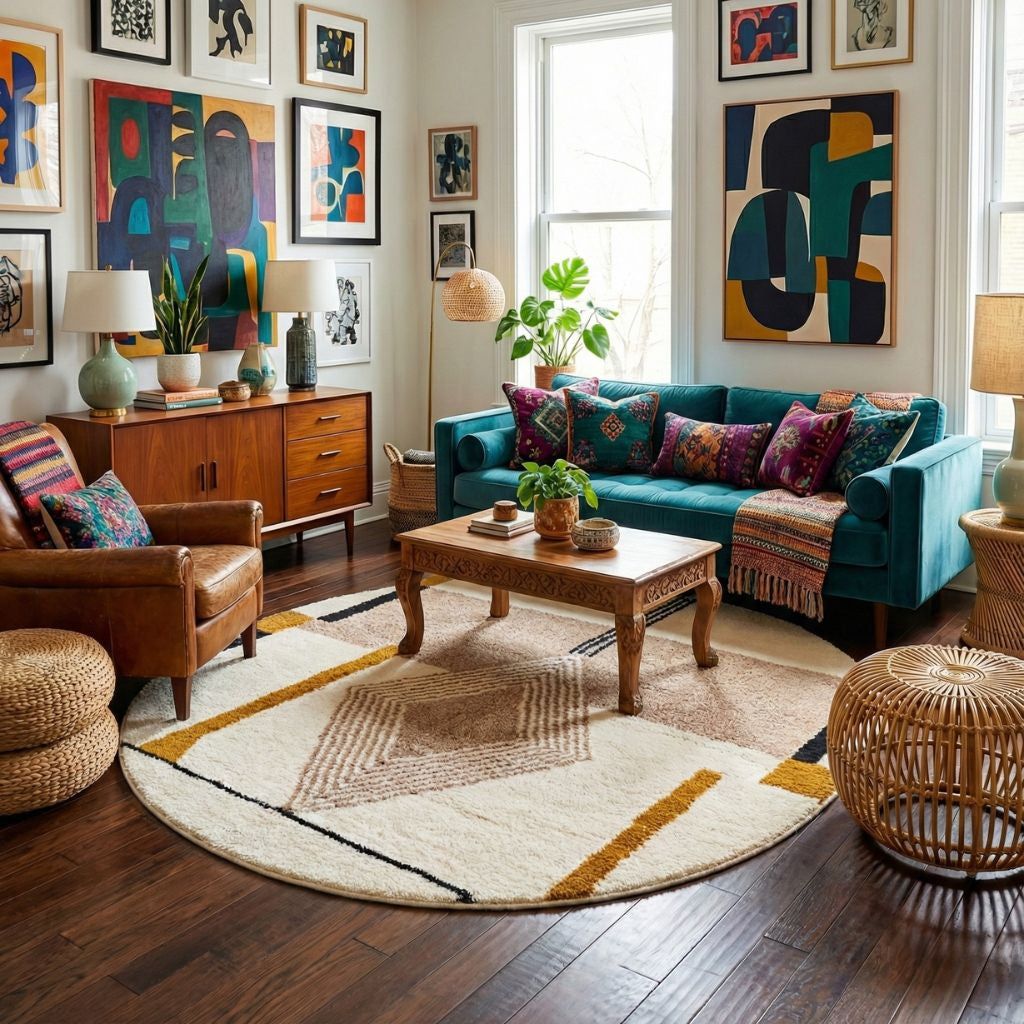
You’ve got an image you love - maybe you created it with AI using our beginner’s guide to AI wall art. The next decision can make or break how it looks at home: size and frame. Get it right, and the piece feels like it was made for the wall. Get it wrong, and even a great image can feel lost or overwhelming. This guide walks you through choosing dimensions, aspect ratio, and frame style so your art looks intentional in any room.
Why Size and Frame Matter
The same artwork can feel bold and confident or shy and forgettable depending on how large it is and what surrounds it. Size anchors the piece in the space; the frame adds finish and can either blend with your decor or become part of the statement. Getting both right means your wall looks curated, not accidental.
Start With the Wall (Not the Print)
Before you pick a size from a dropdown, look at where the art will hang. Measure the wall area you want to fill - the width and height between furniture, moulding, or adjacent pieces. A common rule of thumb is to use 50 - 75% of the available width for a single piece. Above a sofa, that might be 90 - 120 cm; in a narrow hallway, 40 - 60 cm can be enough. The goal is proportion: the art should feel connected to the furniture or the wall, not floating in space or crammed in.
Leave breathing room
Resist the urge to max out the space. A margin of wall around the piece gives it weight and makes the room feel calmer. If in doubt, go slightly smaller rather than too large; you can always add a second piece or swap later.
Understanding Aspect Ratio
Aspect ratio is the relationship between width and height (e.g. 16:9, 4:3, 1:1). It’s fixed by your image and by the crop you choose when ordering. Match the ratio to the wall shape. A wide sofa wall suits a horizontal (landscape) image; a tall strip of wall beside a door suits a vertical (portrait) or square crop. If your AI image is square but the wall is wide, consider ordering a wide crop if the tool allows, or hang the square and plan for a second piece beside it later.
Common choices: horizontal (wide) for above-sofa or above-bed; vertical (tall) for narrow walls and entries; square for flexible spots and gallery-style grids. Thinking about the wall first makes the aspect ratio choice obvious.
Choosing a Print Size
Print sizes are usually given in centimetres (e.g. 40 x 60 cm, 50 x 70 cm, 60 x 80 cm). The first number is width, the second height. Use your wall measurements: subtract some margin, then pick the nearest standard size that fits. For a single statement piece above a sofa, 60 x 80 cm or 70 x 100 cm often works. For a smaller accent - above a sideboard or desk - 40 x 50 cm or 50 x 70 cm is enough. In a cluster or gallery wall, mixing sizes (e.g. one large + two smaller) adds interest.
Resolution and viewing distance
If you’re going large (e.g. 80 cm or more on the long side), your source image should be high quality so it stays sharp when viewed up close. Many AI and print services handle upscaling; if yours does, you can push size a bit further. For pieces that will be seen mostly from across the room, slightly softer detail is less noticeable.
Frame Style: What Works Where
Frames do two things: they protect the print and they visually “finish” the art. Neutral frames (black, white, light wood, natural wood) suit almost any interior and keep the focus on the image. Black or dark grey works well with bold or high-contrast art; white and light wood suit soft, airy, or minimalist pieces. Metal frames (e.g. thin aluminium) read modern and clean; thicker wood reads warmer and more traditional.
- Minimalist and modern rooms - Thin black, white, or metal frames; or no frame (canvas wrap or flush mount) for a clean look.
- Scandinavian or neutral decor - Light wood or white frames; simple profiles.
- Industrial or bold spaces - Black or dark metal; slightly heavier profiles can hold their own.
- Classic or cozy rooms - Natural wood, warm tones; a bit more width to the frame.
If you already have other framed art in the room, repeating the same frame colour or material ties the wall together. Mixing is fine too - just keep one element consistent (e.g. all black frames, or all natural wood) so it doesn’t feel random.
Use a Live Preview Before You Order
When you’re about to order, use the preview that shows your image at real size with the frame you chose. That moment saves a lot of “I wish I’d gone bigger” or “the frame is too heavy.” What looks right on screen at small size can feel different at 60 x 80 cm with a 3 cm black frame. Trust the preview: if it feels balanced there, it will usually feel balanced on the wall.
Quick Reference: Size by Location
- Above sofa / bed - Often 60 x 80 cm to 70 x 100 cm (or equivalent width). Horizontal or wide crop.
- Above sideboard / console - 40 x 50 cm to 50 x 70 cm. Horizontal or square.
- Hallway or next to door - 30 x 40 cm to 50 x 70 cm. Vertical or square.
- Gallery wall - Mix 2 - 3 sizes; one anchor (e.g. 50 x 70 cm) and smaller pieces (e.g. 30 x 40 cm). Same or complementary frame style.
- Desk or shelf - 20 x 30 cm to 30 x 40 cm. Small accent.
You’re Ready to Choose
Size and frame are not afterthoughts - they’re what turn a good image into wall art that fits your space. Measure the wall, match the aspect ratio to the wall shape, pick a standard size that leaves a little breathing room, and choose a frame that either blends in or deliberately stands out. Then hit preview, and order when it looks right.
Already created your image? If you’re still at the idea stage, start with our guide on how to create stunning AI wall art; once you have a piece you love, come back to this guide to size and frame it with confidence. Giving wall art as a gift? Our personalized wall art gift guide has occasion ideas and sizing tips.

